Scientific and Practical Conference “Corporate Governance in the Context of European Integration: Current Challenges for the Judiciary” Was Held
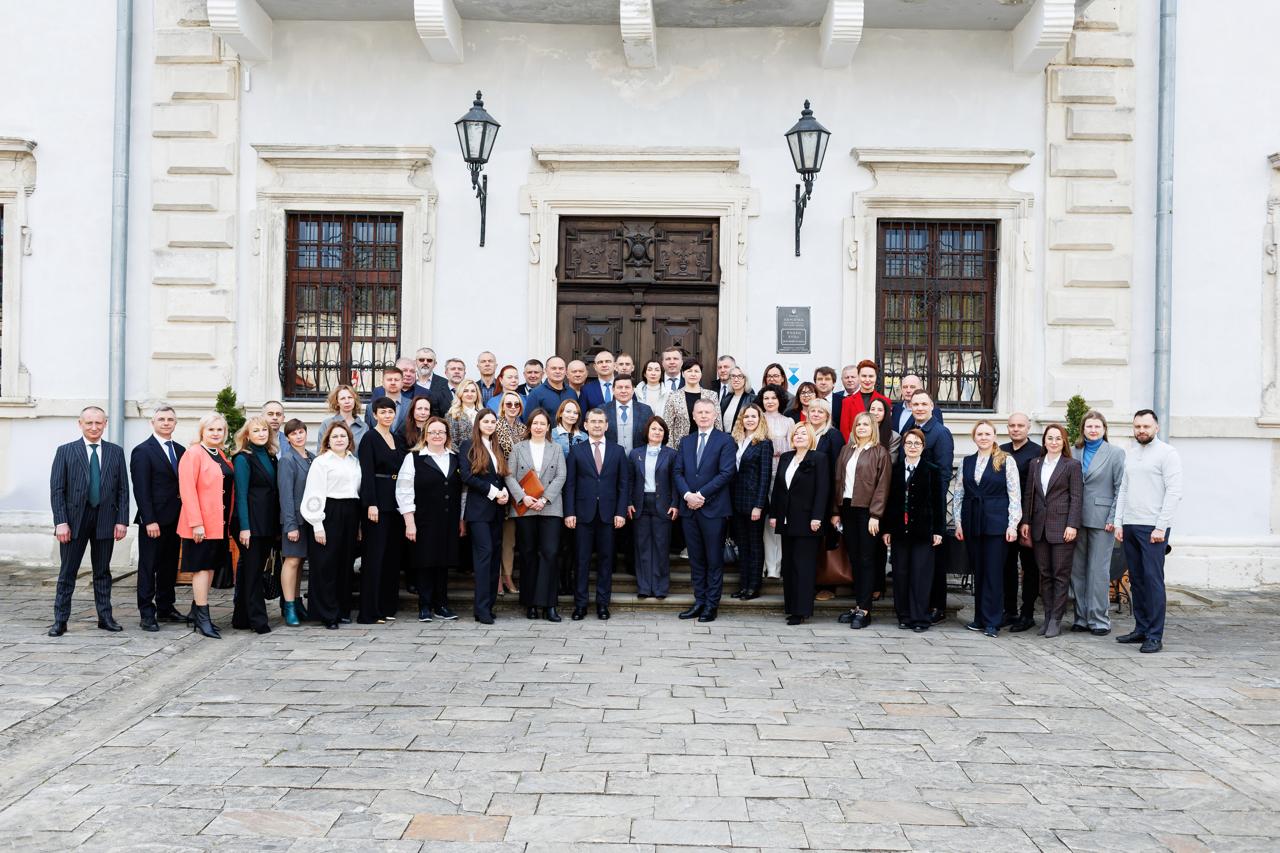
On 17 April, a scientific and practical conference “Corporate Governance in the Context of European Integration: Current Challenges for the Judiciary” was held in Ternopil. The event was organised by the Economic Court of Cassation of the Supreme Court (ECC of SC) jointly with the Academician F.H. Burchak Research Institute of Private Law and Entrepreneurship of the National Academy of Sciences of Ukraine, the National School of Judges of Ukraine, the Association of Judges of Economic Courts of Ukraine, and the Economic Court of Ternopil Region with the support of EU Project Pravo-Justice.
The discussion was attended by judges of the Economic Court of Cassation, the Grand Chamber of the Supreme Court, appellate and local economic courts, MPs, representatives of the State Property Fund of Ukraine, the National Securities and Stock Market Commission, academics, lawyers, and experts of EU Project Pravo-Justice.
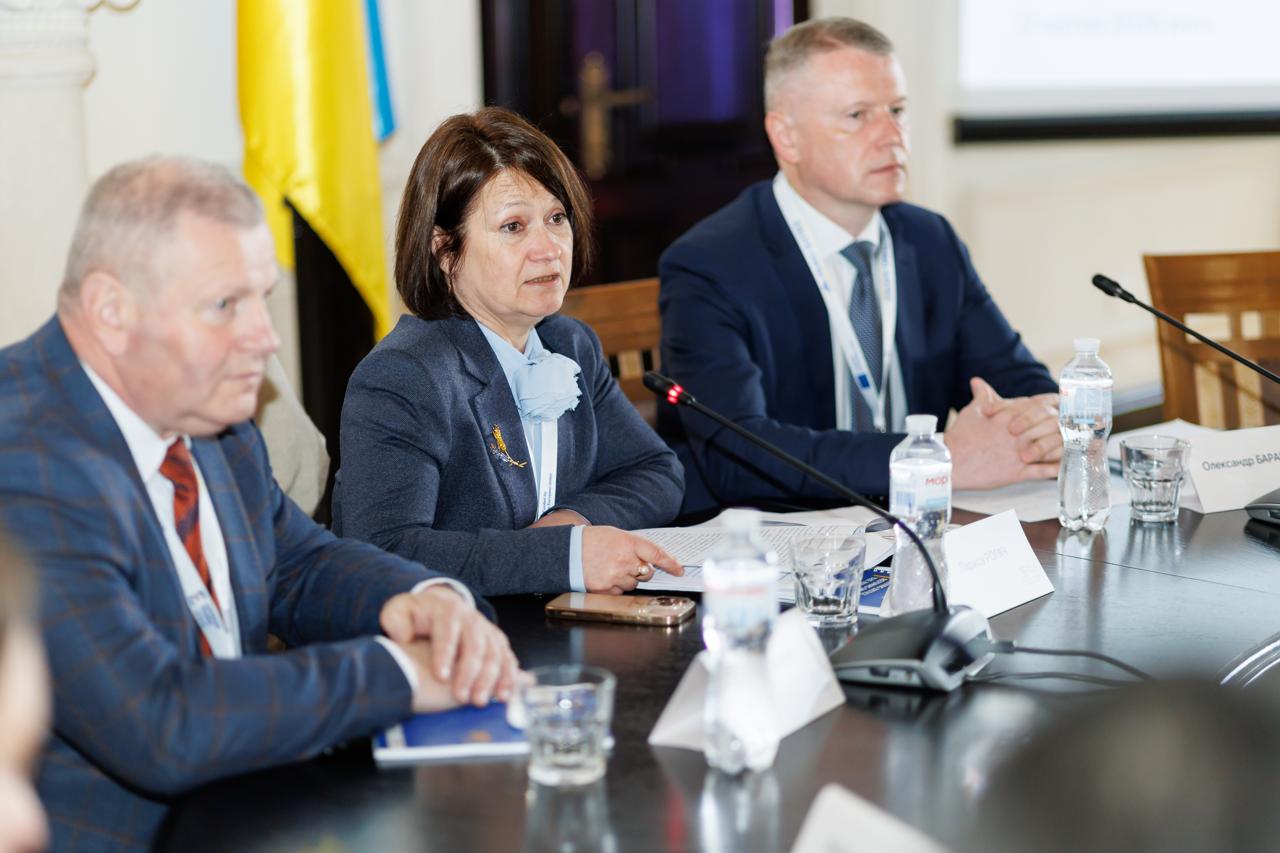
“Corporate disputes occupy a special place among the cases considered by economic courts, as they are not only conflicts between company shareholders. Each such case involves the interests of enterprises, employees, creditors, investors, and often the strategic interests of the state. The efficiency and predictability of decisions in these disputes directly determine the investment attractiveness of a country. It is through the law enforcement activities of commercial courts that a predictable business environment is formed and the rights of all parties involved," said Larysa Rohach, Chair of the Economic Court of Cassation of the Supreme Court.
Oleksandr Baranets, Secretary of the Judicial Chamber for Corporate Disputes, Corporate Rights and Securities of the ECC of the Supreme Court, stated that today economic courts consider corporate disputes in an increasingly complex environment. Due to the complexity cases, they need to be considered by expanded panels of seven or sometimes nine judges. According to him, martial law poses additional challenges, as it raises new legal issues for the courts. At the same time, Ukraine’s European integration course requires European approaches and standards be taken into account in application of law.
Continuing the topic of challenges and transformations in the field of corporate law, Ivan Kalaur, Ukrainian MP, drew attention to the need to update approaches provided by the existing legislation.
“European integration processes and the peculiarities of martial law prompt the rapid modernisation of legislation in the field of corporate relations. I am convinced that these changes will be the impetus for rethinking approaches to corporate governance and further development of this area of law,” said Ivan Kalaur.
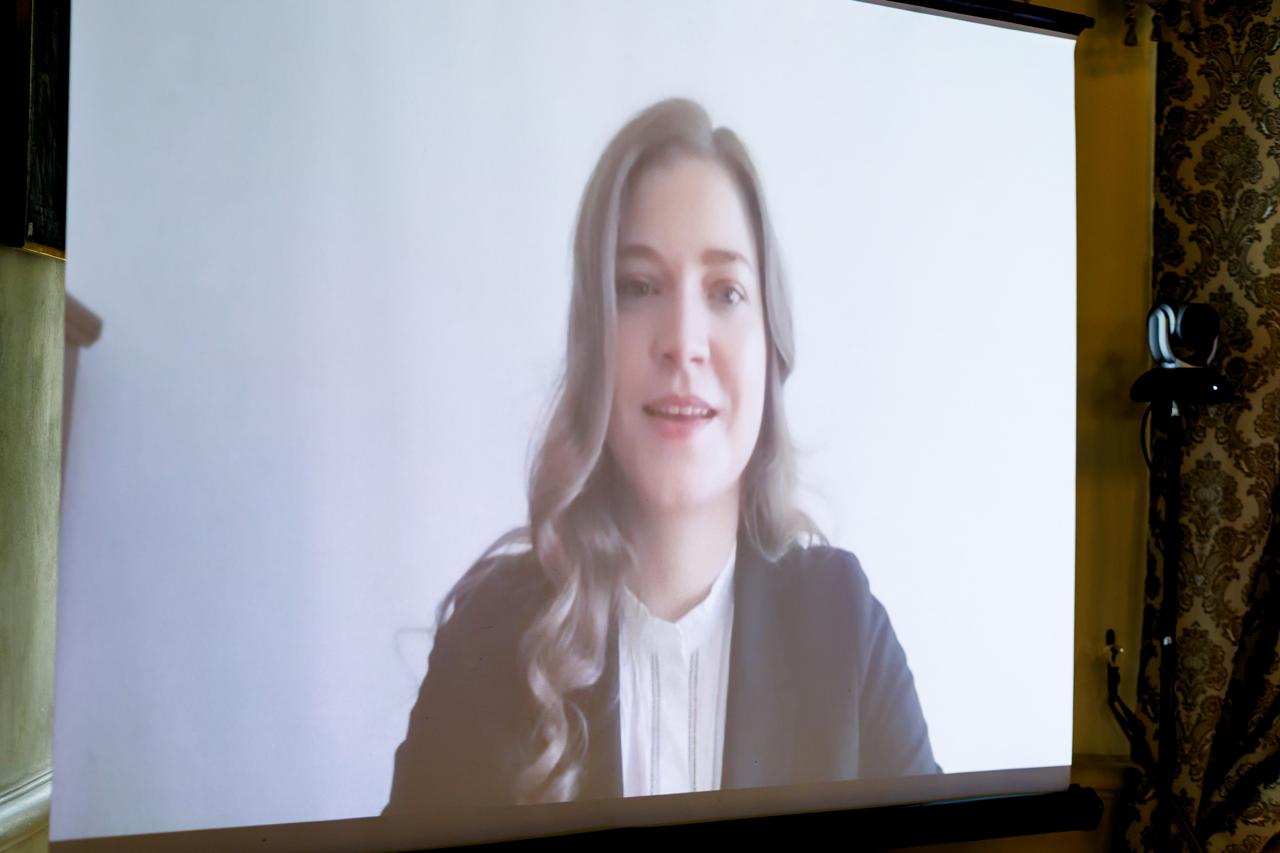
In her turn, Olha Sribniak, Deputy Team Leader of EU Project Pravo-Justice, stressed that Ukraine’s European integration requires significant changes in the legal and economic spheres, including corporate governance. According to her, corporate governance is gradually moving towards more transparent and accountable models based on EU law and the standards of the Organisation for Economic Co-operation and Development.
“These changes pose new challenges for the courts, as they must ensure the practical implementation of new approaches through the formation of sustainable and predictable case law. Corporate governance reforms are an integral part of strengthening the rule of law, including within the framework of the Ukraine Facility. Therefore, EU Project Pravo-Justice supports these processes by participating in the development of legislation, in particular on the enforcement of court decisions and insolvency, and developing the professional competencies of judges,” said Olha Sribniak.
The scientific and practical conference was held in the format of four thematic sections. The first one was dedicated to European integration requirements for corporate governance. The second one focused on corporate dispute resolution through the prism of evidence, judicial control and protection of shareholders’ rights in the context of Ukraine's European integration. The third section covered the transformation of the public sector of the economy and changes in approaches to corporate governance in state-owned and municipal enterprises in the context of reforms and European integration. The fourth section was dedicated to governance and corporate control, including the use of artificial intelligence systems, compensation for damages caused to a legal entity by its officials, corporate rights in farms, and fiduciary duties of company directors.
During the first section, Arne Engels, Key International Expert at EU Project Pravo-Justice, spoke about corporate governance regulation in the EU. He emphasised that there is no single model of corporate governance in the EU, but all approaches are based on a balance of interests of the state, business, and employees. At the same time, he noted that European regulation is gradually moving from recommendations to mandatory rules with the gradual introduction of new requirements for business adaptation.
“The European model of corporate governance is based not only on profitability, but also on the balance between efficiency, responsibility and good governance, and this approach is a key benchmark for reforms,” said Arne Engels.
He also mentioned modern European regulatory instruments, such as the GDPR (General Data Protection Regulation of the European Union), artificial intelligence regulation and compliance rules, which are gradually becoming relevant for Ukraine as part of its European integration and the formation of a common legal space with the EU.
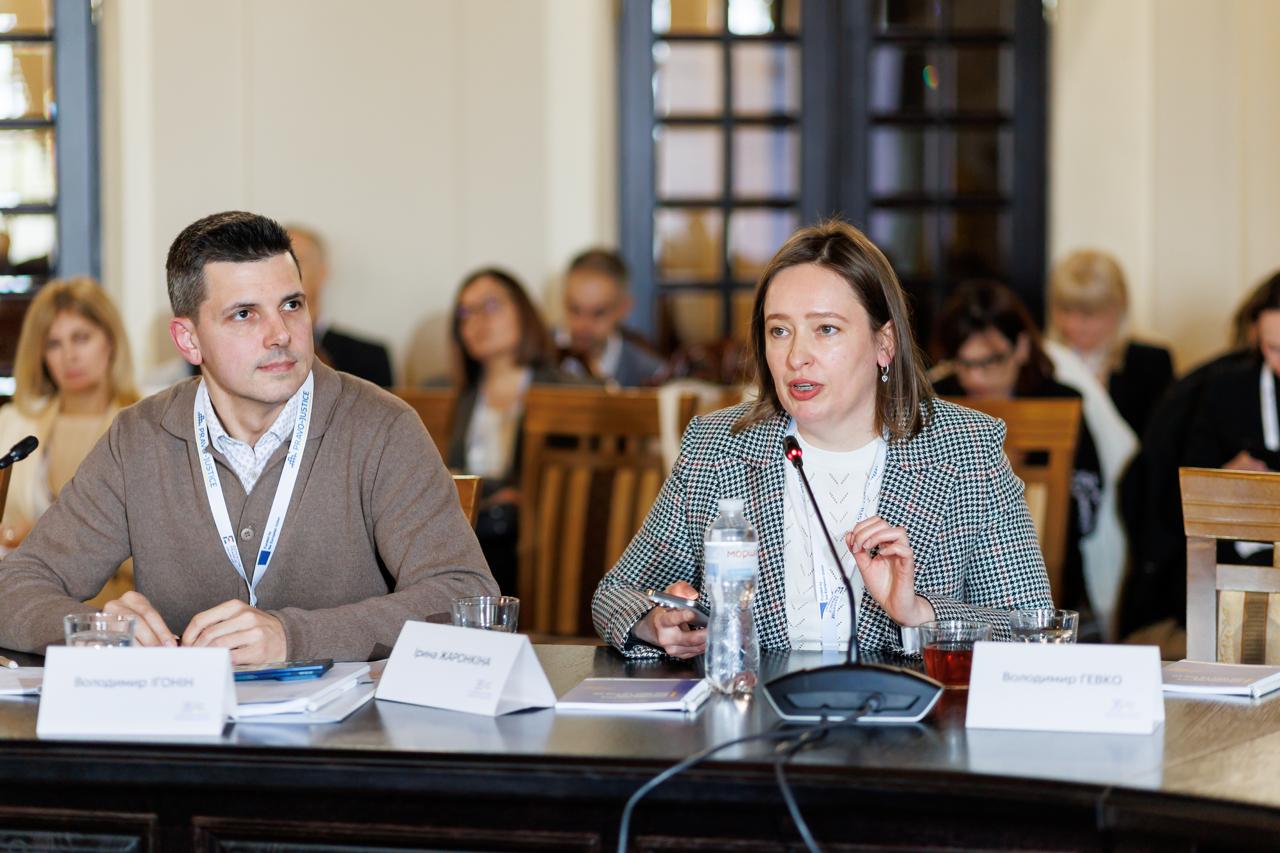
Iryna Zharonkina, Enforcement and Protection of Property Rights Component Lead at EU Project Pravo-Justice, who moderated the third section, highlighted the specifics of the reform of the management of state-owned enterprises and state assets. According to her, the key logic of the changes is to rethink the role of the state as an owner, in particular, to increase management efficiency, change approaches to the management of state-owned enterprises, and introduce a mandatory corporate governance system at state-owned enterprises.
“Bringing the management of state-owned enterprises closer to EU standards is not a technical reform, but a change in the role of the state: from administrator to responsible owner,” said Iryna Zharonkina.